Turn tables faster
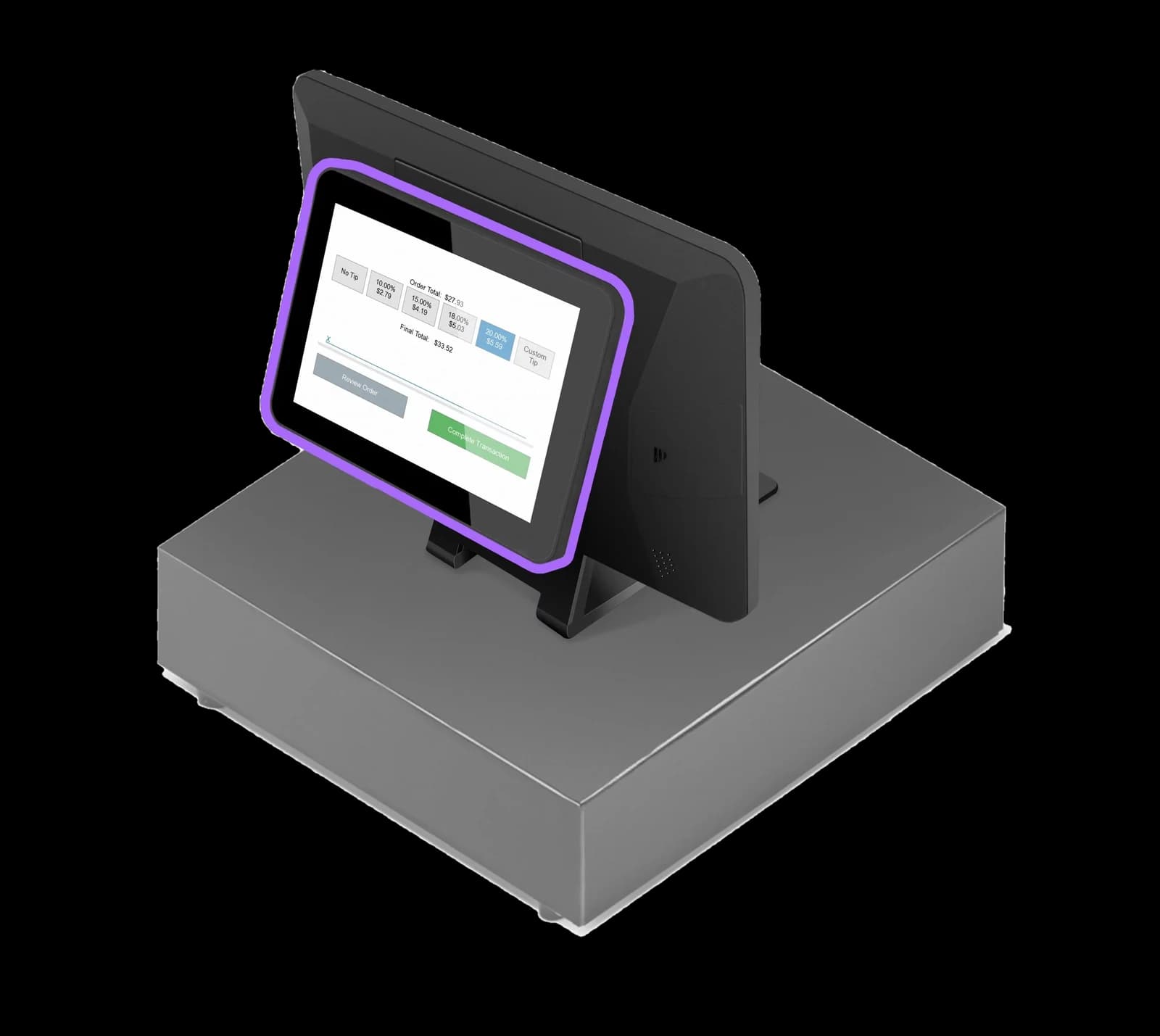
Fire courses from the floor, split checks by item, and take payment at the table so guests leave when they are ready.

FOOD SERVICE
A tab walks. The internet drops. A delivery order gets re-keyed into the wrong tablet. We look at how your room actually runs, then advise on the payment setup, the hardware, and the funding behind it.
Fire courses from the floor, split checks by item, and take payment at the table so guests leave when they are ready.
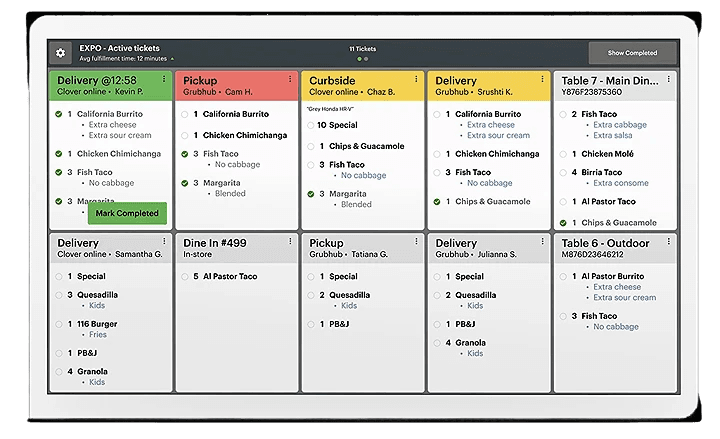
Kitchen displays route each part of an order to the station that makes it, with modifiers arriving in full.
Online and marketplace orders enter the same queue instead of being re-keyed by hand during the rush.
A restaurant is several businesses running at once. The dining room turns tables, the bar runs open tabs, the kitchen fires to a clock, and somewhere behind all of it a phone rings with a delivery order. Each behaves differently at the payment layer, and most operators end up with a setup that handles one of them well and the rest badly.
So we start by asking how your room runs. Whether you course. Whether servers cash out or you run a cashiering environment. How much volume comes in off premise, and what happens at close. The right hardware and the right processing setup fall out of those answers, not the other way around.

Holding a stack of cards behind the bar is both a liability and a bottleneck. Authorizing a tab up front lets your bartender open it, hand the card back, and keep pouring. At close, tips are adjusted against that authorization instead of being chased afterward.
The failure people underestimate is the walked tab. If no authorization was taken, or it was taken well below where the tab ended up, you absorb the difference.
Timing is the part of service guests notice most and the part payment vendors talk about least. Appetizers landing on top of entrees. A four top waiting while a two top that ordered later gets served. Most of that is a firing problem rather than a kitchen problem.
A manager should be able to fire the next course from the floor plan without tracking down the server first. Seat level entry tells the runner where each plate goes. Required modifiers force an order to be complete before it leaves the terminal, so the line is not guessing about temperature, sauce, or a substitution.
Kitchen displays replace paper tickets and route each part of an order to the station that makes it, so the grill and the pasta station work toward the same pickup time. Allergen and dietary notes live on the item, so when an ingredient changes you change it once and every server sees it on the next order.
Off premise orders usually get bolted on one channel at a time, and the setup never gets revisited. A tablet for each marketplace, orders re-keyed into the POS by hand, and payouts arriving on different schedules from different places.
The re-keying is the expensive part. It burns labour during the rush and introduces errors that come back as remakes and refunds. Reconciliation is the other half. If you cannot tell which channel still makes money once labour and third party costs are counted, you cannot decide which channels to keep.
Food service has a specific cash problem. Receipts arrive daily, food cost moves week to week, payroll lands on a fixed schedule, and the equipment that fails is never the optional kind. A walk in compressor does not wait for a good month.
Seasonality sharpens it. A patio room, a campus location, or a business that lives on a summer season carries fixed cost through months of thin volume. We work with restaurant clients on business capital, and on consumer financing where ticket sizes justify it, such as catering contracts and private events. Whether either is the right move depends on your margins and your season.
Most rooms are more than one of these at once.
Coursing, seat level entry, and payment brought to the table.
Tab authorization, tip adjustment, and fast reconciliation at close.
Speed at the counter, a customer facing display, and a short queue.
Throughput first, with order accuracy that holds up at volume.
Portable hardware and a setup that survives a weak connection.
Online and marketplace orders landing in one queue.
Tell us how your room runs, where service backs up, and what your off premise volume looks like. We will tell you what we would change and what we would leave alone.