Quote and approve faster
Estimates a client can open and approve in one step, converting into an invoice without re-entry.

SERVICE BUSINESSES
Almost everything difficult about your payments comes out of that one fact. We look at how you quote, bill, and collect, then advise on the setup and the funding behind it.
Estimates a client can open and approve in one step, converting into an invoice without re-entry.
Portable terminals and invoices sent before you pull out of the driveway.
Online booking, automatic reminders, and a cancellation policy you can actually enforce.
Stored cards, automatic retries, and someone looking at the failed payment list.
A store knows within seconds whether it got paid. You find out in three weeks, or you find out when the cheque does not show up.
That gap is where service businesses lose money, and hardly any of it is about processing. It is about how long the quote sat unopened, how many days passed between finishing the job and sending the invoice, and how many times somebody had to chase it afterward.
So the first thing we look at is the timeline. When work gets quoted, when it gets approved, when the invoice goes out, and when the money lands. Most owners have never written that sequence down, and it is almost always longer than they assume.
An estimate sitting in an inbox is not a job. Sending it as something the client can open, read, and approve in one step takes days off the front of your timeline, and it leaves you a record of what they agreed to.
That record matters more than it sounds. Scope disagreement is the most common reason service invoices go unpaid, and a phone conversation is not something you can produce three months later.
Service businesses rarely bill only one way. A firm can run flat fee work, hourly work, and a retainer at the same time. Itemization is what prevents the argument, because a client who can see hours, parts, and labour separately asks a question, while a client who sees one number asks for a discount.
Plenty of Canadian service businesses still get paid by cheque. It feels like it costs nothing. It does not. Someone drives to the bank, the funds clear on a schedule you do not control, and if it bounces you learn about it late.
Interac e-Transfer is the other habit, and it has limits worth understanding. Banks cap what a client can send in a day, so larger invoices get split across several transfers or refused outright. Nothing reconciles a transfer back to a specific invoice, so a person does that by hand. There is also no dispute process, which cuts in both directions.
Putting a payment option on the invoice itself does not mean abandoning the other methods. It means the client who wants to pay at eleven at night from their phone can do it then, instead of adding your invoice to a stack they intend to deal with on the weekend.

If your work happens at a customer's home or on their site, the minute the job finishes is the best moment you will ever get to collect. The customer is standing right there and the work is fresh. A week later, neither of those is true.
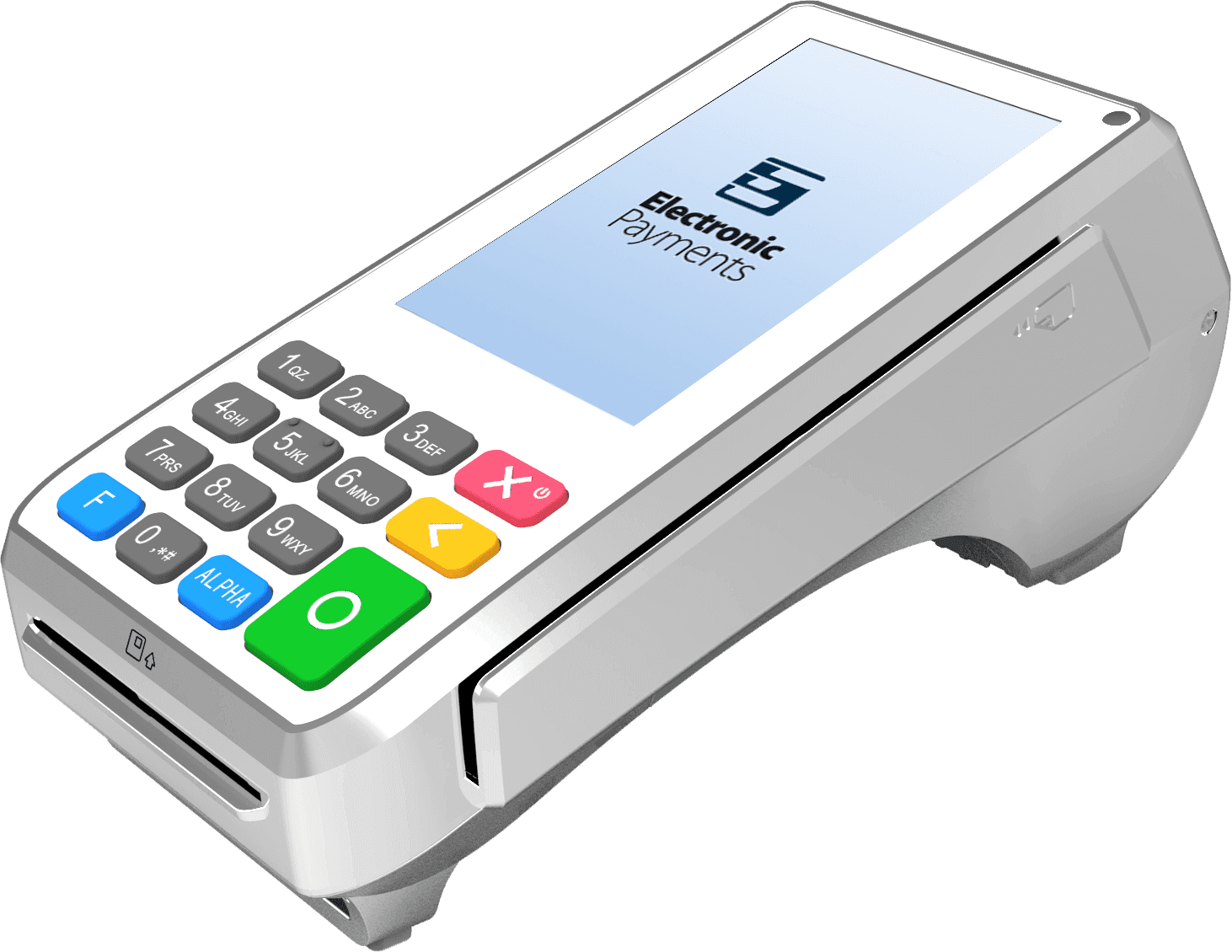
Portable terminals handle this. So does sending the invoice from the truck before you pull out of the driveway.

If your revenue depends on people showing up at a specific time, the empty slot is your largest single loss and the easiest one to stop noticing.
Online booking moves that work off your phone and onto the client's own time, which is usually evenings and weekends. Automatic reminders by text and email reduce the number of people who simply forget.
The harder question is your cancellation policy. Holding a card at the time of booking and stating the terms plainly is the only version that actually functions, because a policy you do not enforce is not a policy. Whether you should charge for a late cancellation at all depends on your market and your clientele, and it is worth deciding deliberately rather than discovering your position during an argument.
Maintenance agreements, monitoring contracts, and retainers are the most valuable revenue you have, because you can predict them. They are also where quiet losses happen.
Cards expire. They get reissued after fraud. A charge fails and nobody notices until the client calls about something unrelated and you find out you have been servicing them for months without billing.
What you want is a stored card arrangement with clear written consent from the client, automatic retries when a charge fails, and a person who actually looks at the failed payment list. The last part is not a technology problem, and no system solves it for you.
Service disputes look nothing like retail ones. The card was almost never present, and the argument is usually about whether the work was done, or done the way it was agreed.
Your defence is documentation you gathered before the dispute existed. None of it can be created after the notice arrives, which is exactly why it has to be routine rather than something you do on important jobs.
Your statement descriptor matters here too. If your operating name is different from your legal name, clients will not recognize the charge, and some of them will dispute it without ever picking up the phone to ask you about it.
This is the structural problem in service work. Your people get paid weekly or every two weeks. Your clients pay on their own terms, and commercial clients often pay slowly on purpose. Materials get bought up front. You are financing the gap out of your own pocket.
Growth makes this worse rather than better. A larger contract means a larger gap, which is how a service business ends up fully booked and still short on cash.
We work with service clients on business capital to cover that gap, and on consumer financing where you sell into homes. A roof, a furnace, or a full renovation is a decision a homeowner makes differently when they can pay over time, and the contractor who can offer that is often the one who gets the job. Whether it fits depends on your ticket sizes and your margins, and we will tell you when it does not.
Different trades, same underlying problem.
HVAC, plumbing, electrical, and renovation, billed by job or by milestone.
Landscaping, snow removal, and seasonal contracts billed on a schedule.
Recurring commercial contracts and one off residential work.
Accounting, legal, and consulting billed hourly, flat fee, or on retainer.
Installation up front and monitoring billed monthly after.
Salons, grooming, and anything where the empty slot is the loss.
Tell us how you quote, how you bill, and where invoices get stuck. We will tell you what we would change and what we would leave alone.